
Softball guide
Softball Helmet Size Guide
How to size a youth softball batting helmet — head circumference measurement, face guard requirements, and what certification marks to look for.
Best next step
Check the table, then confirm the brand chart.

Photo: Jacob McGowin / Unsplash
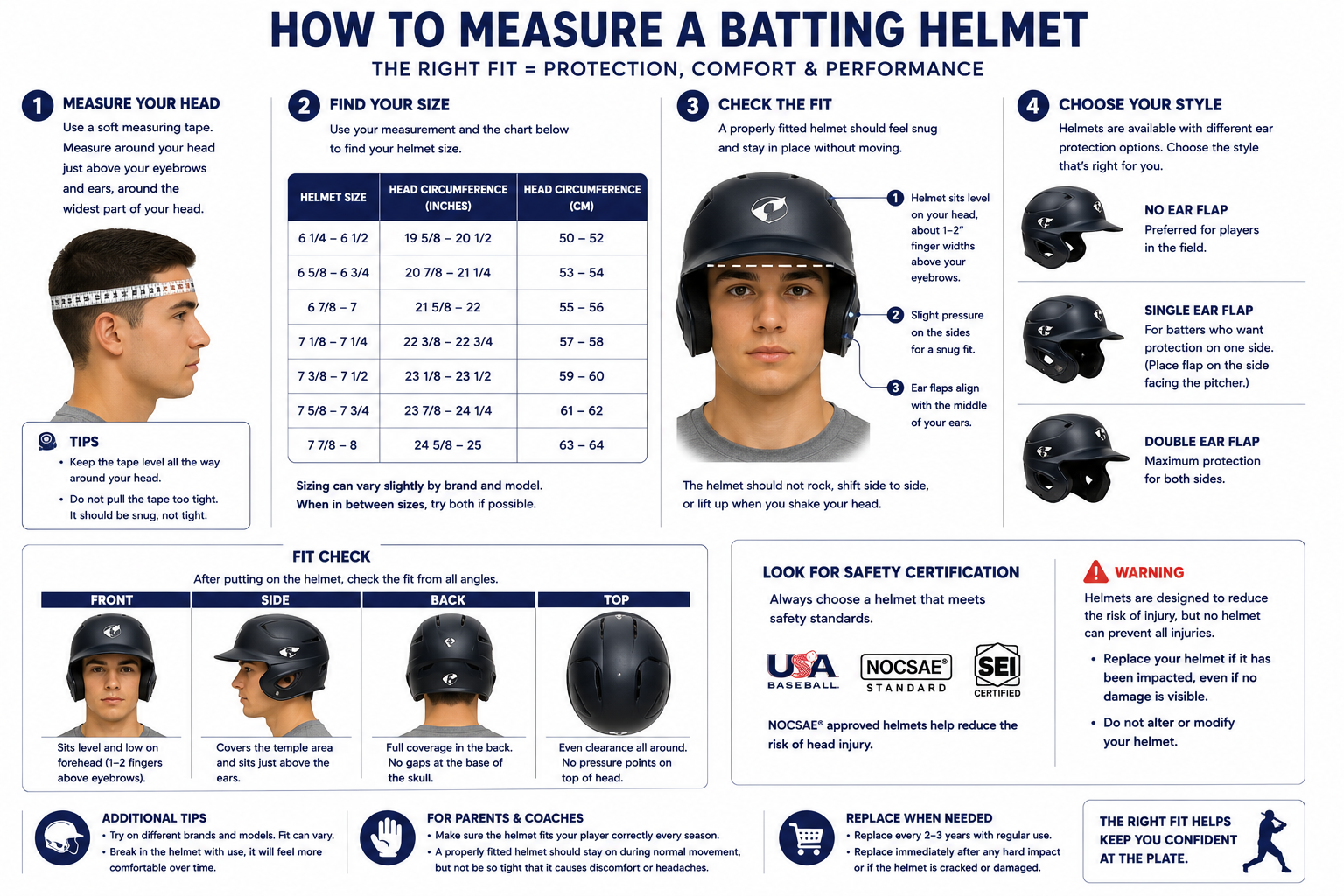
Softball batting helmets are sized the same way as baseball batting helmets — by head circumference, measured with a soft tape around the widest part of the head, above the eyebrows and ears. The sizing method is identical. What differs in softball is the face guard requirement: most youth leagues require a full face guard or cage on the batting helmet, especially for younger players.
A two-piece helmet setup — shell plus an add-on cage — can work, but integrated helmet-and-cage designs are generally sturdier and less likely to shift during play. Some leagues publish a specific approved list. When in doubt, buy the integrated version and confirm the certification mark matches the league requirement before the first game.
Editorial note
We use these guides as starting ranges, then compare the recommendation against brand charts, fit checks, and sport-specific safety rules before surfacing gear links. Read more about how our sizing works.
Spot a range that looks off, or a league rule we should mention? Tell us — corrections make these guides better for every parent.
Step 1
Find the likely size range
| Player / measurement | Starting size | Notes |
|---|---|---|
| Step 1 | Measure head circumference | Use a soft tape one finger-width above the eyebrows. Record in cm and inches. |
| Step 2 | Match to brand chart | Size ranges differ by brand and model. Do not use last season's size. |
| Step 3 | Check face guard | Confirm league face guard requirement before buying. |
| Step 4 | Fit check | Helmet sits level, does not rock, and sits no more than one finger-width above the eyebrows. |
Step 2
Measure before you shop
Points to measure
Softball helmet measuring path
Measure head circumference above the eyebrows before checking the brand chart. Most youth leagues require a face guard.
- 1Above eyebrowsTape starts one finger-width above the brow.
- 2Level around headKeep tape level over the ears and around the back.
- 3Face guard checkConfirm league requires face guard before buying — most youth programs do.
- 1Wrap a soft measuring tape around the widest part of the head, one finger-width above the eyebrows and just above the ears.
- 2Record in centimeters if possible — many brands list both. Do not round to the nearest half-inch.
- 3Confirm the specific model chart because two helmets labeled the same size by different brands can fit very differently.
Good reasons
When to size up
- Your child is between sizes and the larger size still feels controlled.
- The season is several months long and the gear is not protective headgear.
- The brand chart says the current measurement is at the top of a range.
Avoid these
Common mistakes
- Buying only for growth and making the gear hard to control.
- Skipping the brand chart because another brand fit last season.
- Ignoring league rules for bats, balls, sticks, and protective equipment.
Parent tip
Do not buy a baseball batting helmet for softball unless it has the correct face guard. The protection standard is the same, but league rules around the cage may differ.
FAQ
Is this size guaranteed to fit?
No. Treat it as a good starting point, then check the brand's official size chart before buying.
What should I do when my child is between sizes?
Consider comfort, growth, position, league rules, and whether the gear is protective. Avoid sizing up helmets without a proper chart match.
Related guides
Know your child's starting size before you shop.
Answer 4 quick questions — sport, gear type, age, and height — and get a beginner-safe size range plus what to avoid.