
Softball guide
Softball Bat Size by Age
Softball bat length and drop weight guide for youth players — including USAbat certification, barrel size differences, and age-based starting ranges.
Best next step
Check the table, then confirm the brand chart.

Photo: Jacob McGowin / Unsplash
Softball bats are sized by length in inches, but they differ significantly from baseball bats in barrel diameter, drop weight, and certification. Youth softball leagues use an 11-inch or 12-inch ball (compared to baseball's 9-inch ball), which calls for a larger barrel. USAbat certification applies to fastpitch and most slowpitch youth programs — always confirm what certification your league requires before buying.
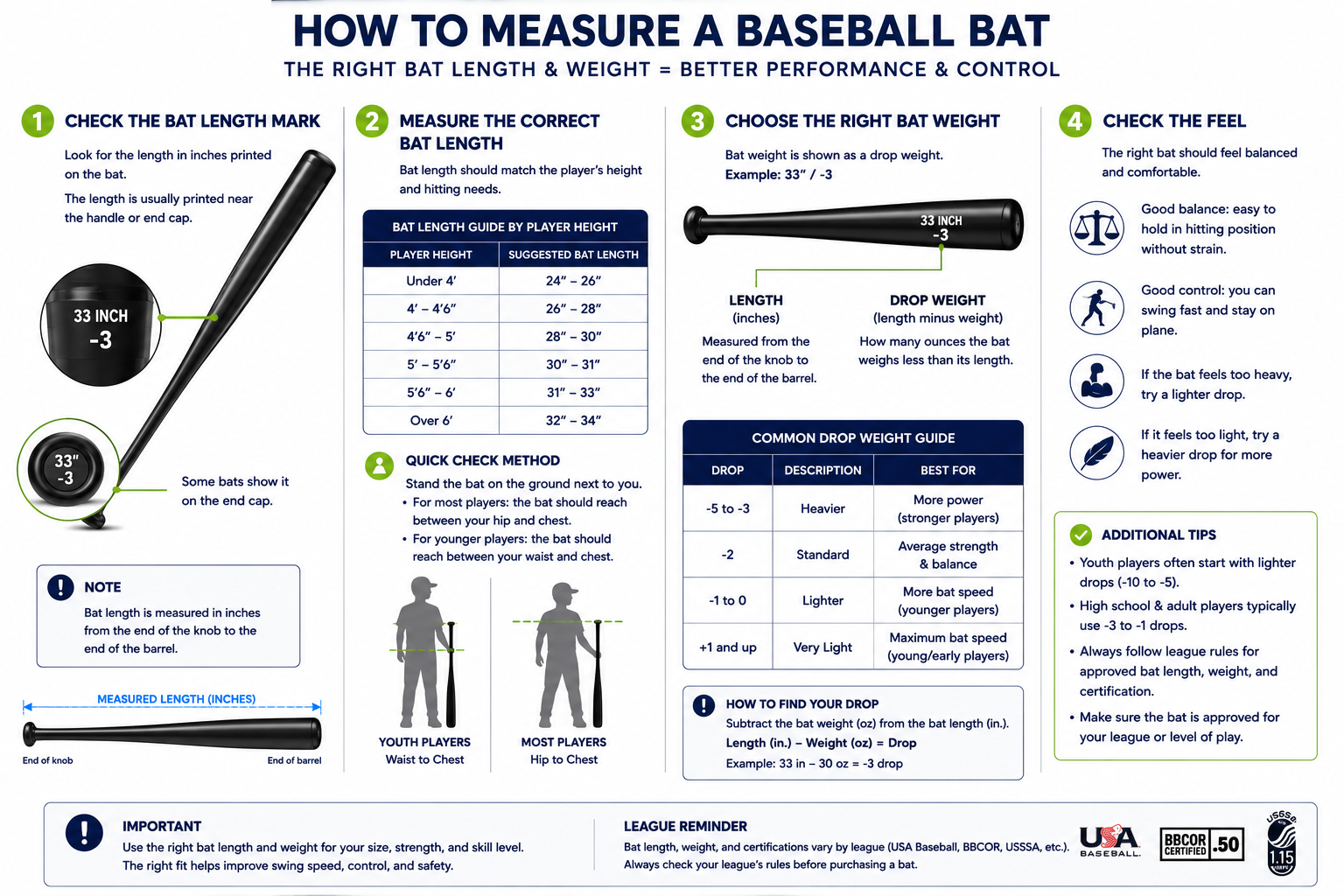
Drop weight — the number that represents the difference between length in inches and weight in ounces — matters for younger players. A lighter bat (higher drop, like -12 or -13) is easier for smaller kids to swing with control. The goal at every age is a bat the player can swing level and repeatably, not the longest bat available.
Editorial note
We use these guides as starting ranges, then compare the recommendation against brand charts, fit checks, and sport-specific safety rules before surfacing gear links. Read more about how our sizing works.
Spot a range that looks off, or a league rule we should mention? Tell us — corrections make these guides better for every parent.
Step 1
Find the likely size range
| Player / measurement | Starting size | Notes |
|---|---|---|
| Ages 5-7 / Under 4 ft | 24-26 in / Drop -12 to -13 | Aluminum or composite. Match the 11-inch tee ball or softball. |
| Ages 8-10 / 4 ft to 4 ft 7 in | 26-29 in / Drop -10 to -12 | Confirm USAbat certification for league play. |
| Ages 11-13 / 4 ft 8 in to 5 ft 2 in | 29-32 in / Drop -10 to -12 | Fastpitch bats use a 2¼ inch barrel for sanctioned leagues. |
| Ages 13-14+ / 5 ft 2 in+ | 31-34 in / Drop -8 to -10 | High school programs may require specific certifications — confirm rules. |
Step 2
Measure before you shop
Points to measure
Softball bat length checkpoints
Measure from chest to fingertip for starting length. Softball bats require different certification than baseball bats — confirm with your league.
- 1Chest to fingertipExtend arm — bat should roughly match this length for a starting estimate.
- 2Swing controlPlayer must swing the bat level and repeatably — choose lighter over longer.
- 3League certificationConfirm USAbat or required cert mark is on the bat before buying.
- 1Measure from the center of the chest to the tip of the middle finger. Compare to the brand length chart.
- 2Check that the player can swing the bat level, through a full rotation, without the barrel dropping.
- 3Confirm the certification mark on the bat matches your league requirement before purchasing.
Good reasons
When to size up
- Your child is between sizes and the larger size still feels controlled.
- The season is several months long and the gear is not protective headgear.
- The brand chart says the current measurement is at the top of a range.
Avoid these
Common mistakes
- Buying only for growth and making the gear hard to control.
- Skipping the brand chart because another brand fit last season.
- Ignoring league rules for bats, balls, sticks, and protective equipment.
Parent tip
Have your child extend the bat arm-length down from their side — if the bat knob touches the ground, it may be too long. A bat they can swing level without dragging is the right choice.
FAQ
Is this size guaranteed to fit?
No. Treat it as a good starting point, then check the brand's official size chart before buying.
What should I do when my child is between sizes?
Consider comfort, growth, position, league rules, and whether the gear is protective. Avoid sizing up helmets without a proper chart match.
Related guides
Know your child's starting size before you shop.
Answer 4 quick questions — sport, gear type, age, and height — and get a beginner-safe size range plus what to avoid.