
Softball guide
Softball Cleat Size Guide
How to size youth softball cleats — molded vs metal stud rules, fit with game socks, and what to check before the first practice.
Best next step
Check the table, then confirm the brand chart.

Photo: Jacob McGowin / Unsplash
Softball cleats differ from soccer and football cleats in stud pattern. Unlike football cleats, softball cleats do not have a toe stud under the big toe. Unlike soccer cleats, softball cleats often come in mid-cut or high-cut ankle heights for added ankle support, especially for catchers and infielders who pivot frequently. Metal cleats have better grip but are banned in most youth leagues.
For first-season players, the right cleat is the one that fits the foot correctly with game socks. A heel that slips during lateral movement — pivoting to field a ground ball or running the bases — is the biggest fit problem at the youth level. Ankle height is a secondary preference that can be guided by position and personal comfort.
Editorial note
We use these guides as starting ranges, then compare the recommendation against brand charts, fit checks, and sport-specific safety rules before surfacing gear links. Read more about how our sizing works.
Spot a range that looks off, or a league rule we should mention? Tell us — corrections make these guides better for every parent.
Step 1
Find the likely size range
| Player / measurement | Starting size | Notes |
|---|---|---|
| Ages 5-7 (recreation programs) | Athletic shoe or youth cleat | Some rec programs allow regular athletic shoes — confirm before buying cleats. |
| Ages 8-10 (youth leagues) | Youth cleats, molded studs | Try on with softball game socks. Heel should not slip during lateral movement. |
| Ages 11-13 (travel / school ball) | Youth cleats, molded or confirm metal rules | Travel programs sometimes allow metal cleats — check league rules. |
| Ages 14+ (high school programs) | Confirm metal cleat eligibility | High school programs often allow metal cleats. Confirm with program before buying. |
Step 2
Measure before you shop
Points to measure
Softball cleat fit checkpoints
Try on with game socks and check heel security. Most youth leagues require molded studs — confirm metal cleat rules before buying.
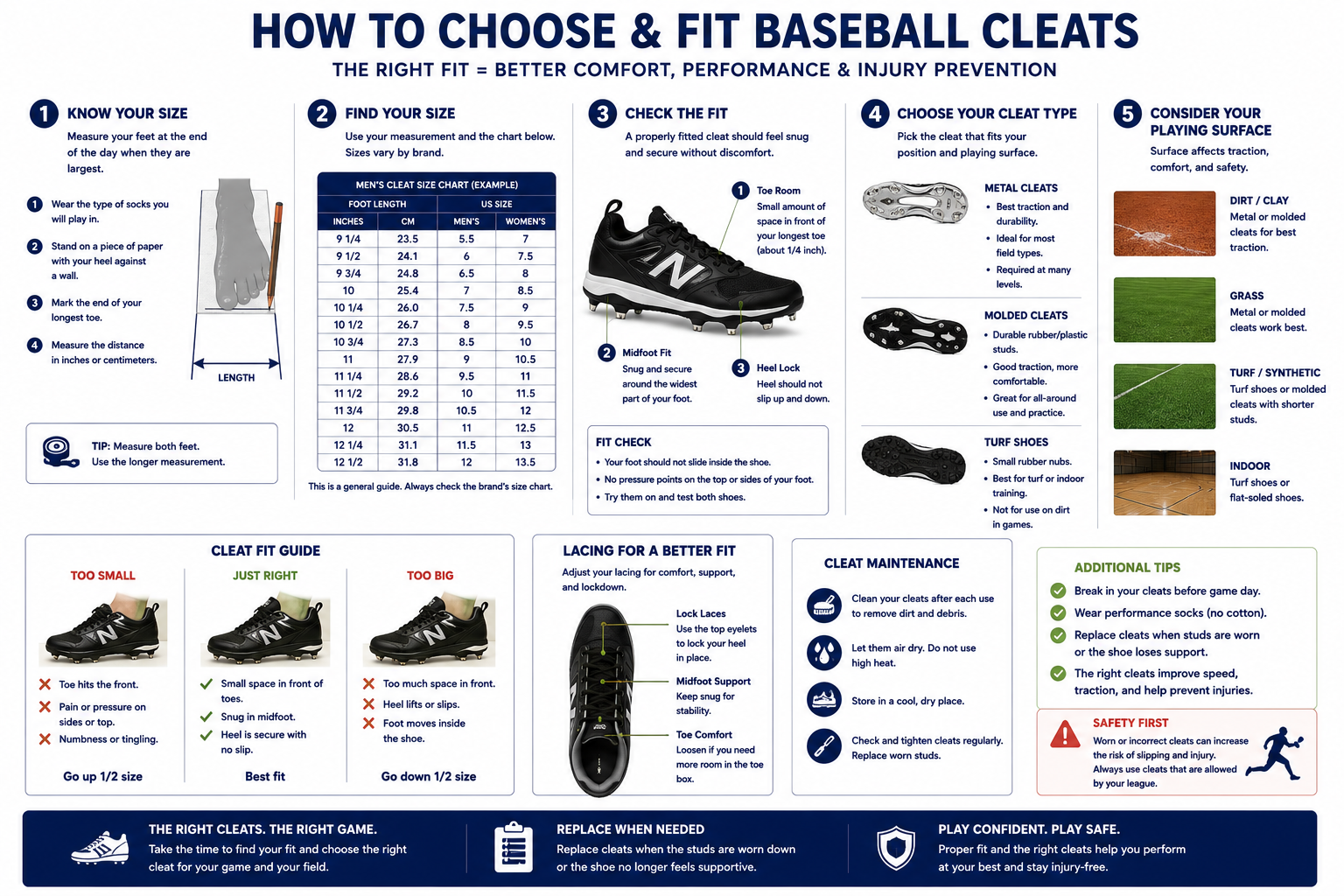
- 1Toe roomThumbnail of space at the front — not a full size of growth.
- 2Heel holdHeel should not slide when pivoting or running bases.
- 3Stud typeMolded studs for most youth leagues. Confirm metal cleat eligibility with your program.
- 1Measure feet at the end of the day and try on with the socks worn during games.
- 2Leave a thumbnail of space at the front of the toe box.
- 3Walk on the balls of your feet — heel should not lift more than a small amount inside the shoe.
Good reasons
When to size up
- Your child is between sizes and the larger size still feels controlled.
- The season is several months long and the gear is not protective headgear.
- The brand chart says the current measurement is at the top of a range.
Avoid these
Common mistakes
- Buying only for growth and making the gear hard to control.
- Skipping the brand chart because another brand fit last season.
- Ignoring league rules for bats, balls, sticks, and protective equipment.
Parent tip
Catchers and infielders who pivot often benefit from mid-cut or high-cut ankle support. Outfielders and base runners often prefer low-cut for agility.
FAQ
Is this size guaranteed to fit?
No. Treat it as a good starting point, then check the brand's official size chart before buying.
What should I do when my child is between sizes?
Consider comfort, growth, position, league rules, and whether the gear is protective. Avoid sizing up helmets without a proper chart match.
Related guides
Know your child's starting size before you shop.
Answer 4 quick questions — sport, gear type, age, and height — and get a beginner-safe size range plus what to avoid.