Skiing guide
Kids Ski Length Chart
How to find the right ski length for a child — height and skill level explained, with beginner vs intermediate targets and tips on sizing down for control.
Best next step
Check the table, then confirm the brand chart.

Photo: Jochen van Wylick / Unsplash
Ski length is measured in centimeters and depends on both height and skill level — not just age. A beginner skier benefits from a shorter ski because shorter skis turn more easily and feel less overwhelming when learning. An intermediate skier at the same height will ride a longer ski for more stability at speed.
The simplest fit check is to stand the ski upright next to the child. For beginners, the tip should fall between the chin and nose. For skiers who are past the first season and starting to link turns consistently, the tip can be between the nose and forehead. Most youth ski rental programs use this same check.
Editorial note
We use these guides as starting ranges, then compare the recommendation against brand charts, fit checks, and sport-specific safety rules before surfacing gear links. Read more about how our sizing works.
Spot a range that looks off, or a league rule we should mention? Tell us — corrections make these guides better for every parent.
Step 1
Find the likely size range
| Player / measurement | Starting size | Notes |
|---|---|---|
| Under 3 ft 8 in (approx. ages 3-4) | Beginner: 65-80 cm | Starter ski programs use very short skis for control. |
| 3 ft 8 in-4 ft 2 in (approx. ages 5-7) | Beginner: 80-100 cm | Tip should reach chin or lower. Err shorter for first season. |
| 4 ft 3 in-4 ft 8 in (approx. ages 8-10) | Beginner: 100-115 cm / Intermediate: 110-125 cm | Intermediate target moves to nose-to-forehead range. |
| 4 ft 9 in-5 ft 2 in (approx. ages 11-13) | Beginner: 115-130 cm / Intermediate: 125-140 cm | Weight matters here — heavier riders take the upper range. |
| 5 ft 3 in+ (approx. ages 14+) | 130-155 cm depending on weight and level | Advanced riders may go above the forehead mark for stability at speed. |
Step 2
Measure before you shop
Points to measure
Ski length checkpoints
Beginners use shorter skis for easier control. Measure with skis upright next to the player.
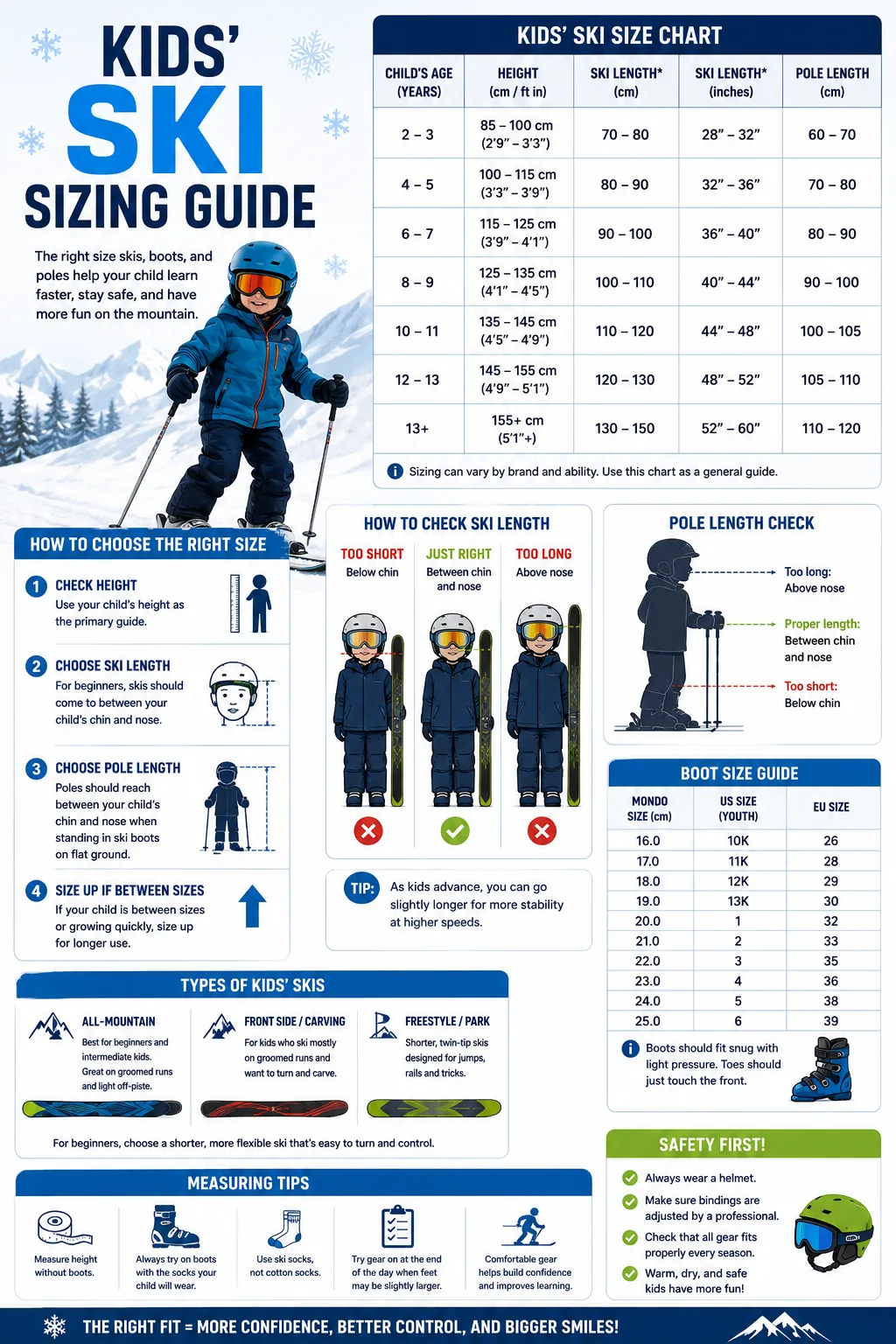
- 1Chin to nose rangeBeginner target: ski tip falls between chin and nose.
- 2Binding zoneBoot should center on the binding mount point.
- 3Weight classHeavier riders may need the longer end of the height range.
- 1Stand the ski upright on the floor next to the child. The tip should fall between the chin and nose for a beginner.
- 2If renting, tell the rental shop the child's height, weight, and whether this is their first season.
- 3If buying, choose the shorter end of the recommended range for a beginner. The child will outgrow a ski before they outgrow the right length.
Good reasons
When to size up
- Your child is between sizes and the larger size still feels controlled.
- The season is several months long and the gear is not protective headgear.
- The brand chart says the current measurement is at the top of a range.
Avoid these
Common mistakes
- Buying only for growth and making the gear hard to control.
- Skipping the brand chart because another brand fit last season.
- Ignoring league rules for bats, balls, sticks, and protective equipment.
Parent tip
When renting for a first-season skier, ask for the shorter end of the recommended range. Control comes from the skier's technique, not ski length — a shorter ski is forgiving while they develop balance.
FAQ
Is this size guaranteed to fit?
No. Treat it as a good starting point, then check the brand's official size chart before buying.
What should I do when my child is between sizes?
Consider comfort, growth, position, league rules, and whether the gear is protective. Avoid sizing up helmets without a proper chart match.
Related guides
Know your child's starting size before you shop.
Answer 4 quick questions — sport, gear type, age, and height — and get a beginner-safe size range plus what to avoid.