Skiing guide
Kids Ski Helmet Size Guide
How to measure for a youth ski helmet — head circumference, fit checks for goggle compatibility, and what MIPS means for beginner buyers.
Best next step
Check the table, then confirm the brand chart.

Photo: Jochen van Wylick / Unsplash
Ski helmets are required at most resorts and ski schools for children under 14, and strongly recommended for all ages. The sizing process is the same as any other helmet: measure head circumference just above the eyebrows, then match to the brand chart. The important difference for ski helmets is goggle compatibility — the helmet and goggles must fit together without a gap at the forehead.
MIPS stands for Multi-directional Impact Protection System. It is a liner inside the helmet that can rotate slightly during an angled impact, reducing rotational force on the brain. Most major ski helmet brands now offer MIPS as a feature at all price points. For youth helmets, MIPS is worth prioritizing when the price difference is small, though a well-fitting standard helmet is better than a poorly fitting MIPS helmet.
Editorial note
We use these guides as starting ranges, then compare the recommendation against brand charts, fit checks, and sport-specific safety rules before surfacing gear links. Read more about how our sizing works.
Spot a range that looks off, or a league rule we should mention? Tell us — corrections make these guides better for every parent.
Step 1
Find the likely size range
| Player / measurement | Starting size | Notes |
|---|---|---|
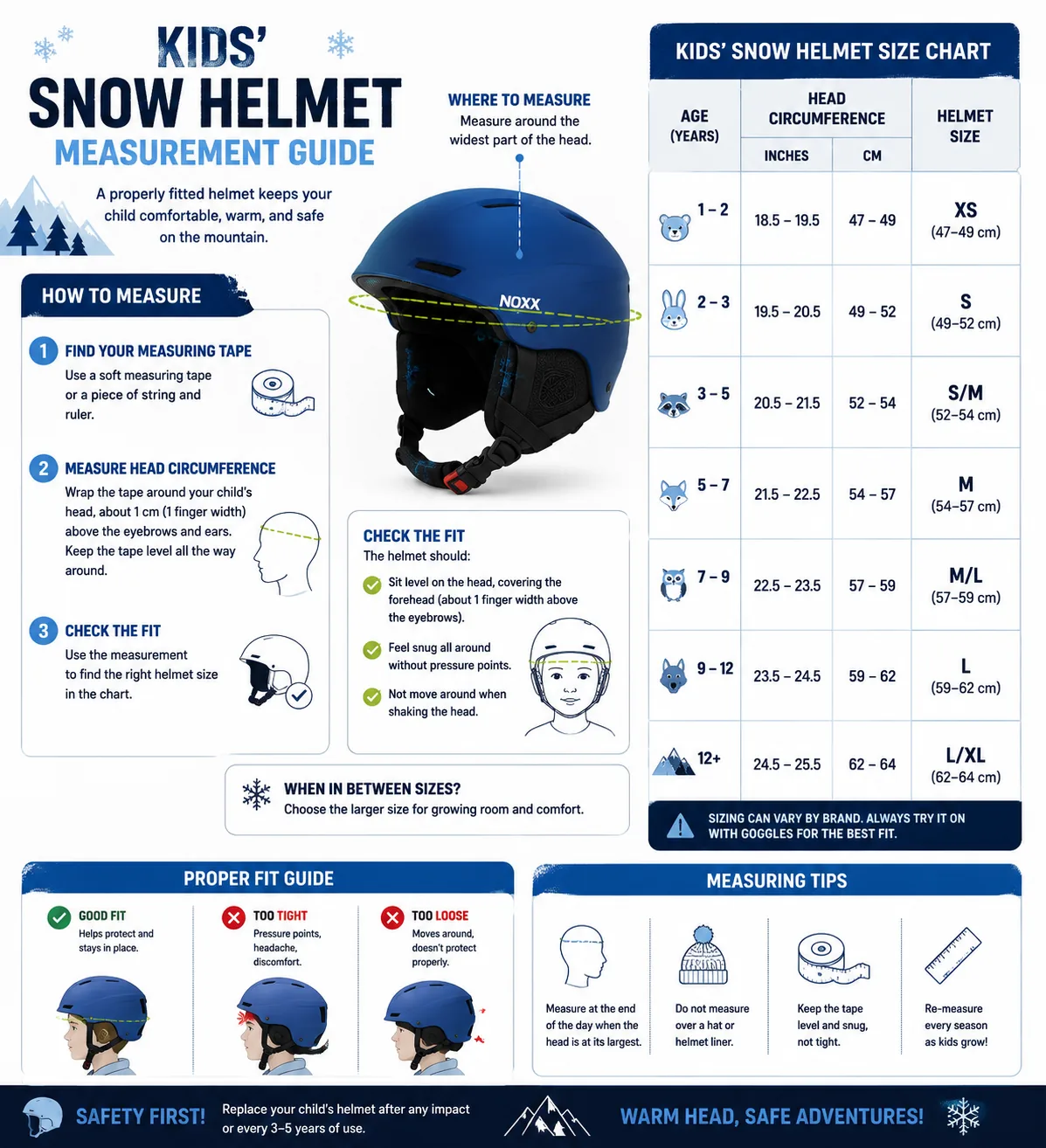
| Under 50 cm head circumference | XS Youth | Very small youth heads. Check goggle fit with the specific helmet model. |
| 50-53 cm | S Youth | Common beginner youth range. Confirm the helmet stays level when shaken side to side. |
| 53-56 cm | M Youth / S Adult | Many youth helmets top out here — check if an adult small fits better. |
| 56-59 cm | M Adult | Teen and adult range. Confirm goggle compatibility before buying separately. |
Step 2
Measure before you shop
Points to measure
Ski helmet measuring path
Measure head circumference one finger-width above the eyebrows.
- 1CircumferenceTape loops just above the eyebrows and ears.
- 2Level fitHelmet sits level, not tilted back.
- 3Goggle gapNo skin gap between helmet and goggle frame.
- 1Wrap a flexible tape around the head about one finger-width above the eyebrows. Keep the tape level all the way around.
- 2Write down the measurement in centimeters and match to the brand chart.
- 3Try the helmet on: it should sit level, not tipped back. Shake the head side to side — the helmet should not rock independently.
Good reasons
When to size up
- Your child is between sizes and the larger size still feels controlled.
- The season is several months long and the gear is not protective headgear.
- The brand chart says the current measurement is at the top of a range.
Avoid these
Common mistakes
- Buying only for growth and making the gear hard to control.
- Skipping the brand chart because another brand fit last season.
- Ignoring league rules for bats, balls, sticks, and protective equipment.
Parent tip
Try the helmet on with the goggles your child will use. There should be no skin gap between the helmet brim and the top of the goggle frame. If buying both together, confirm the fit as a set.
FAQ
Is this size guaranteed to fit?
No. Treat it as a good starting point, then check the brand's official size chart before buying.
What should I do when my child is between sizes?
Consider comfort, growth, position, league rules, and whether the gear is protective. Avoid sizing up helmets without a proper chart match.
Related guides
Know your child's starting size before you shop.
Answer 4 quick questions — sport, gear type, age, and height — and get a beginner-safe size range plus what to avoid.