
Volleyball guide
Volleyball Knee Pad Size Guide
How to size youth volleyball knee pads by leg circumference and height — with notes on coverage, fit checks, and why volleyball pads differ from other sports.
Best next step
Check the table, then confirm the brand chart.
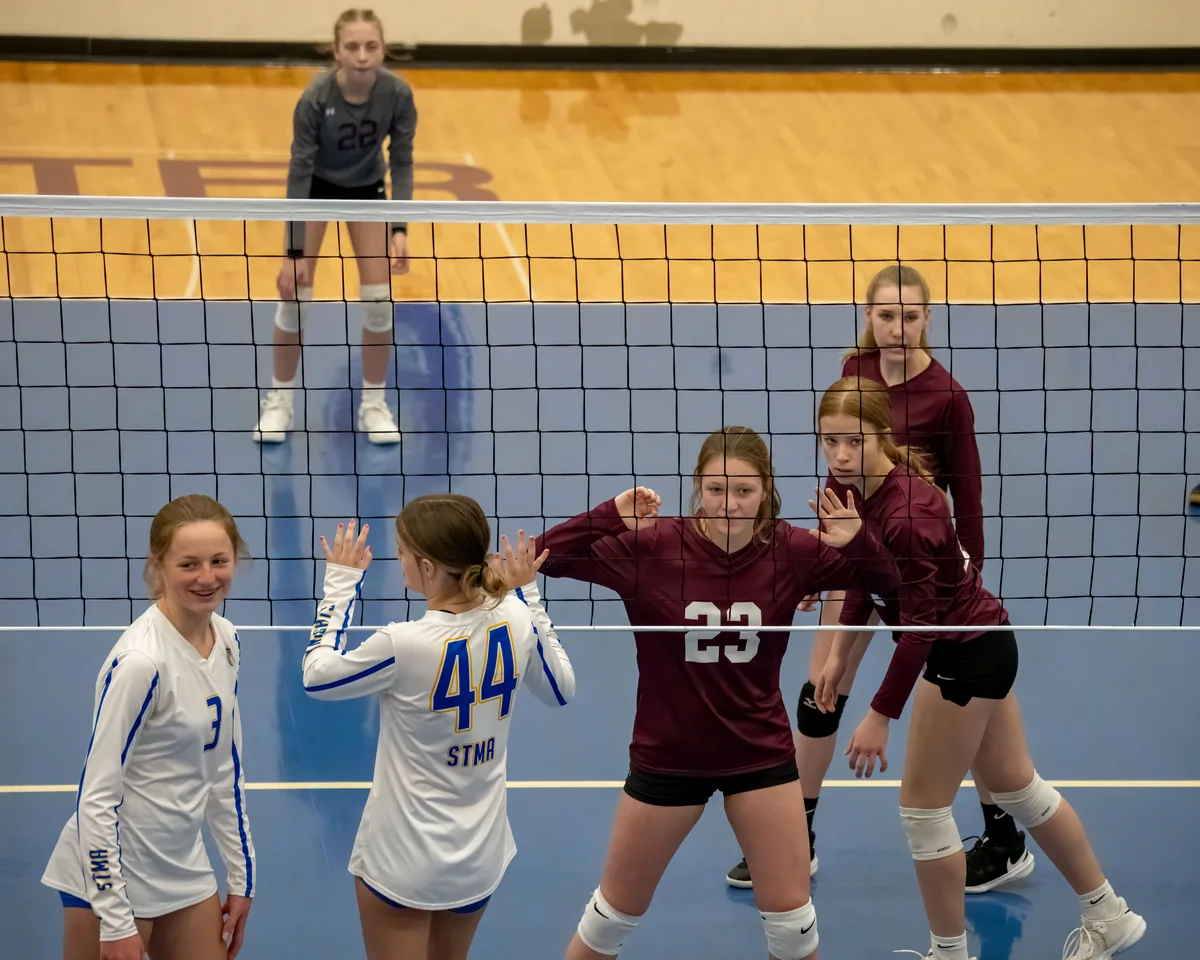
Photo: Tom Fisk / Pexels
Volleyball knee pads are longer and more padded than most other sports knee pads because players dive and slide on hardwood gym floors. A pad that slides or bunches is distracting and leaves the kneecap exposed at the wrong moment.
Fit is more important than size label. Sizes vary significantly by brand, so measure leg circumference and compare against the specific brand chart before ordering.
Editorial note
We use these guides as starting ranges, then compare the recommendation against brand charts, fit checks, and sport-specific safety rules before surfacing gear links. Read more about how our sizing works.
Spot a range that looks off, or a league rule we should mention? Tell us — corrections make these guides better for every parent.
Step 1
Find the likely size range
| Player / measurement | Starting size | Notes |
|---|---|---|
| Leg circumference under 12 in (approx. under 5 ft tall) | XS / Youth Small | Narrow profile. Check that the pad covers the full kneecap and extends slightly below. |
| Leg circumference 12-13.5 in (approx. 5 ft to 5 ft 4 in) | S / Youth Medium | Most common middle school range. Pad should not slide during a dive drill. |
| Leg circumference 13.5-15 in (approx. 5 ft 4 in to 5 ft 8 in) | M / Youth Large | Common high school range. Confirm the pad sits centered on the kneecap, not on the shin. |
| Leg circumference 15+ in (approx. 5 ft 8 in+) | L / XL | Older teens and adults. Some brands offer adult sizing in this range. |
Step 2
Measure before you shop
Points to measure
Volleyball knee pad measuring path
Measure around the center of the kneecap. Brand labels vary, so the circumference is more useful than age.
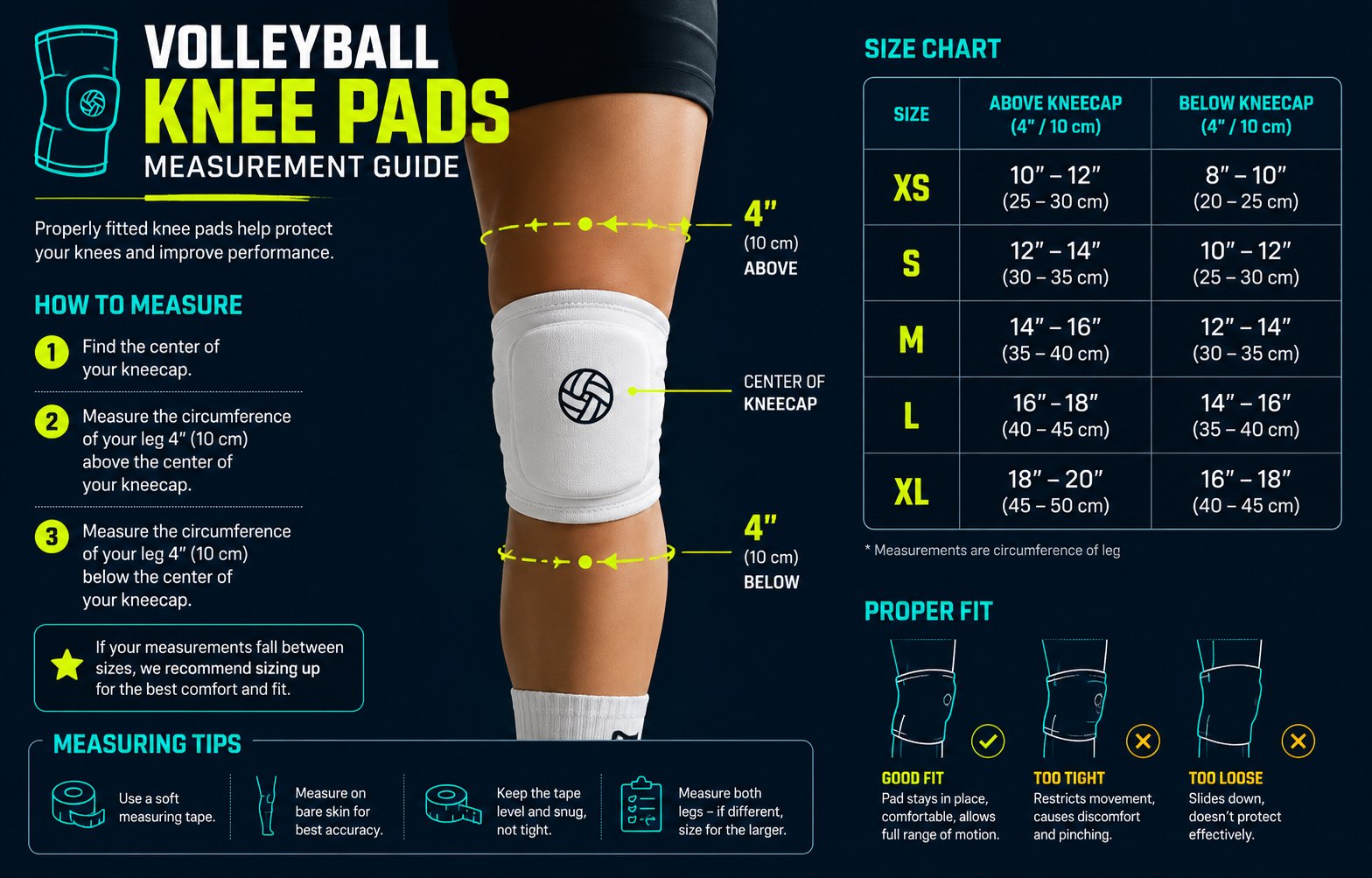
- 1Kneecap circumferenceWrap tape around the center of the kneecap with the leg slightly bent.
- 2Centered coverageFoam should cover the kneecap and extend slightly below.
- 3Movement checkPad should not slide down or bunch behind the knee.
- 1Wrap a flexible tape measure around the leg at the center of the kneecap.
- 2Keep the tape snug but not tight. Measure with the leg slightly bent.
- 3Compare that measurement directly to the brand's chart — size labels vary widely.
Good reasons
When to size up
- Your child is between sizes and the larger size still feels controlled.
- The season is several months long and the gear is not protective headgear.
- The brand chart says the current measurement is at the top of a range.
Avoid these
Common mistakes
- Buying only for growth and making the gear hard to control.
- Skipping the brand chart because another brand fit last season.
- Ignoring league rules for bats, balls, sticks, and protective equipment.
Parent tip
Have your child kneel on the floor and check that the center of the pad aligns with the kneecap. The pad should not slide toward the shin or ride up behind the knee during normal movement.
FAQ
Is this size guaranteed to fit?
No. Treat it as a good starting point, then check the brand's official size chart before buying.
What should I do when my child is between sizes?
Consider comfort, growth, position, league rules, and whether the gear is protective. Avoid sizing up helmets without a proper chart match.
Related guides
Know your child's starting size before you shop.
Answer 4 quick questions — sport, gear type, age, and height — and get a beginner-safe size range plus what to avoid.