Lacrosse guide
Lacrosse Helmet Size Guide
How to measure for a youth lacrosse helmet.
Best next step
Check the table, then confirm the brand chart.

Photo: Jeffrey F Lin / Unsplash
Lacrosse helmets, like all sports helmets, have one non-negotiable starting point: measure head circumference. That number guides you to the right shell range for a specific brand and model. Two helmets that look identical can have different shell dimensions, padding depths, and adjustment ranges — which is why the measurement step always comes before any product selection.
Lacrosse helmets certified for youth play must meet NOCSAE standards, and the certification sticker should be visible on the helmet. When buying used gear, verify that the helmet is within its certified useful life and has not been through a significant impact. A helmet that looks fine from the outside but has compressed internal foam from a prior hit is not providing full protection. For youth players, a new helmet is the safer investment.
Editorial note
We use these guides as starting ranges, then compare the recommendation against brand charts, fit checks, and sport-specific safety rules before surfacing gear links. Read more about how our sizing works.
Spot a range that looks off, or a league rule we should mention? Tell us — corrections make these guides better for every parent.
Step 1
Find the likely size range
| Player / measurement | Starting size | Notes |
|---|---|---|
| Measure | Head circumference | Use a soft tape above eyebrows. |
| Compare | Brand chart | Adjustment systems vary. |
| Check | Secure and level | Helmet should not rock loosely. |
Step 2
Measure before you shop
Points to measure
Lacrosse helmet measuring path
Measure above the eyebrows, then use the specific helmet model chart.
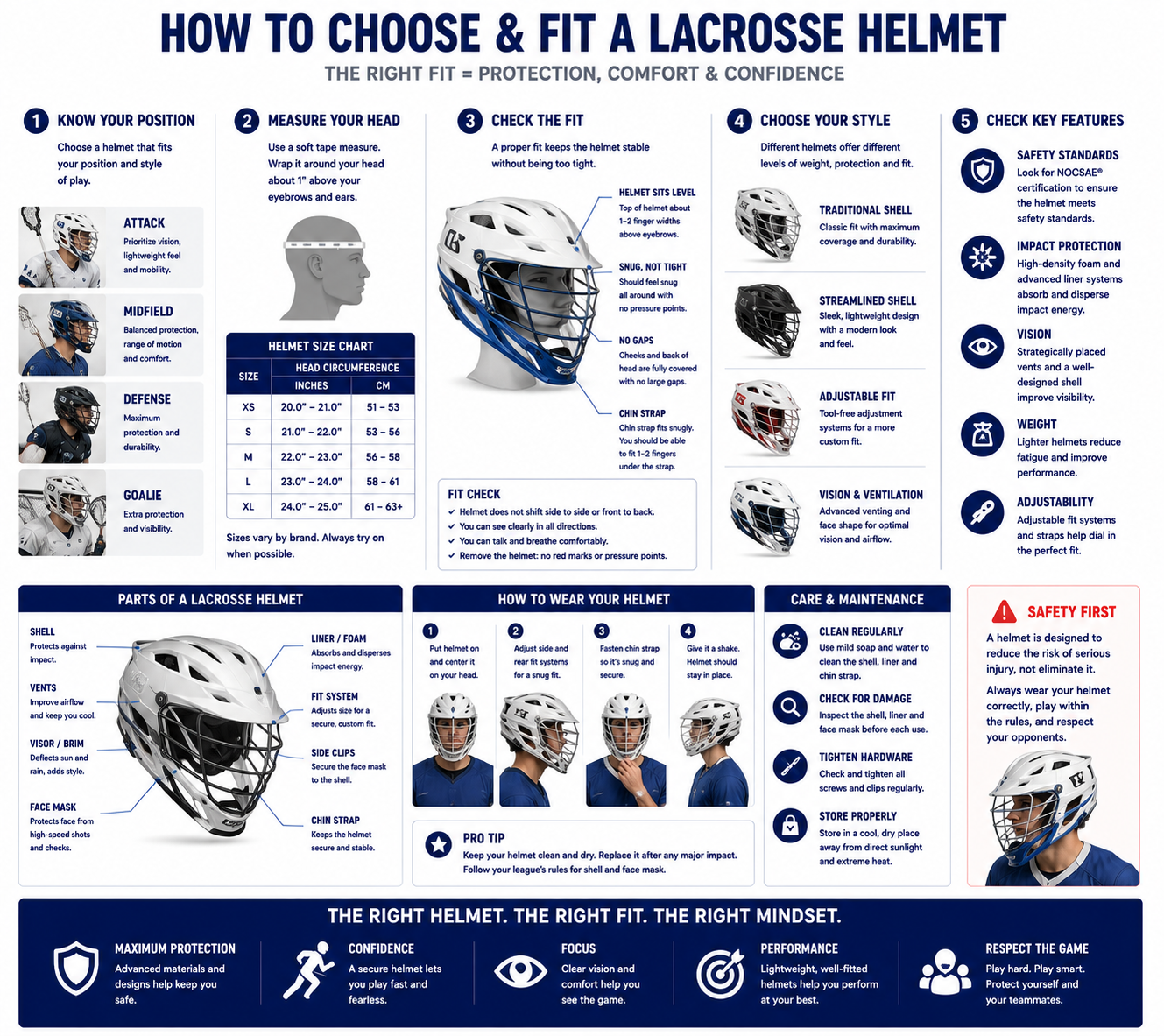
- 1Brow lineTape sits just above the eyebrows.
- 2Level loopKeep tape level around the head.
- 3Secure cageHelmet should not rock loosely.
- 1Measure in socks or the base layer your child will actually wear.
- 2Write down age, height, weight, and any league requirement before shopping.
- 3Compare your measurement to the brand chart and choose the more comfortable beginner-safe range when between sizes.
Good reasons
When to size up
- Your child is between sizes and the larger size still feels controlled.
- The season is several months long and the gear is not protective headgear.
- The brand chart says the current measurement is at the top of a range.
Avoid these
Common mistakes
- Buying only for growth and making the gear hard to control.
- Skipping the brand chart because another brand fit last season.
- Ignoring league rules for bats, balls, sticks, and protective equipment.
Parent tip
Used helmets are risky unless you can verify age, condition, and safety history.
FAQ
Is this size guaranteed to fit?
No. Treat it as a good starting point, then check the brand's official size chart before buying.
What should I do when my child is between sizes?
Consider comfort, growth, position, league rules, and whether the gear is protective. Avoid sizing up helmets without a proper chart match.
Related guides
Know your child's starting size before you shop.
Answer 4 quick questions — sport, gear type, age, and height — and get a beginner-safe size range plus what to avoid.