
Soccer guide
Goalie Glove Size Chart
Youth soccer goalie glove sizing basics.
Best next step
Check the table, then confirm the brand chart.

Photo: Matthew Osborn / Unsplash
Goalkeeper gloves are sized by hand measurement, not by age, and the fit feels different from general sports gloves. A goalkeeper glove should feel snug across the palm with the fingers close to the glove tip — but not jammed. The extra fingertip room that is common in hockey or lacrosse gloves is less desirable here, where extra fabric can reduce the feel on diving saves and ball punching.
For beginners, the most important thing is buying a glove your child can grip and release naturally. High-end goalkeeper gloves use sticky latex palms that are excellent for catching but wear out faster on rough training surfaces. Youth practice gloves use durable flat-palm or grained-palm materials that hold up better. A beginner goalkeeper does not need a match-grade latex palm for their first season.
Editorial note
We use these guides as starting ranges, then compare the recommendation against brand charts, fit checks, and sport-specific safety rules before surfacing gear links. Read more about how our sizing works.
Spot a range that looks off, or a league rule we should mention? Tell us — corrections make these guides better for every parent.
Step 1
Find the likely size range
| Player / measurement | Starting size | Notes |
|---|---|---|
| Small youth | Size 4-5 | Often younger goalkeepers. |
| Medium youth | Size 6-7 | Common older youth range. |
| Teen/adult | Size 8+ | Check palm width and finger length. |
Step 2
Measure before you shop
Points to measure
Goalie glove checkpoints
Measure wrist to middle fingertip, then check palm width and finger room.
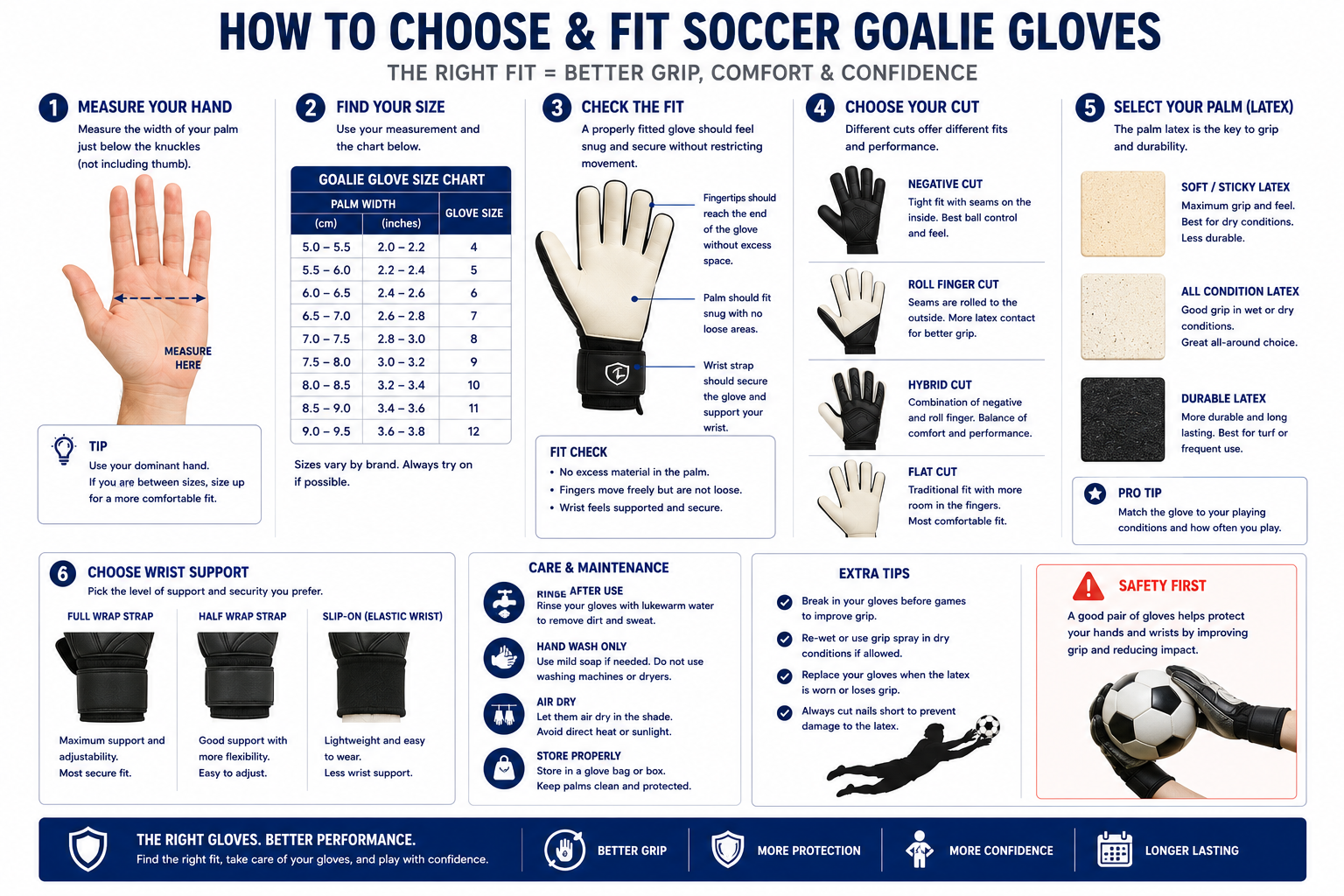
- 1Wrist to fingertipPrimary measurement for many charts.
- 2Palm widthPalm should fill the glove without strain.
- 3Finger roomSmall extra room is fine; floppy is not.
- 1Measure in socks or the base layer your child will actually wear.
- 2Write down age, height, weight, and any league requirement before shopping.
- 3Compare your measurement to the brand chart and choose the more comfortable beginner-safe range when between sizes.
Good reasons
When to size up
- Your child is between sizes and the larger size still feels controlled.
- The season is several months long and the gear is not protective headgear.
- The brand chart says the current measurement is at the top of a range.
Avoid these
Common mistakes
- Buying only for growth and making the gear hard to control.
- Skipping the brand chart because another brand fit last season.
- Ignoring league rules for bats, balls, sticks, and protective equipment.
Parent tip
A little room at the fingertips is normal, but too much space makes catching harder.
FAQ
Is this size guaranteed to fit?
No. Treat it as a good starting point, then check the brand's official size chart before buying.
What should I do when my child is between sizes?
Consider comfort, growth, position, league rules, and whether the gear is protective. Avoid sizing up helmets without a proper chart match.
Related guides
Know your child's starting size before you shop.
Answer 4 quick questions — sport, gear type, age, and height — and get a beginner-safe size range plus what to avoid.