Football guide
Football Shoulder Pad Size Chart
Youth shoulder pad measurement and fit basics.
Best next step
Check the table, then confirm the brand chart.

Photo: Dani Adkins / Unsplash
Shoulder pad fit depends on two measurements working together: shoulder width and chest. A pad that is wide enough for the shoulders but too tight across the chest will restrict arm movement. A pad that is the right chest size but too narrow will leave the AC joint and shoulder tip exposed. Most brands ask for both measurements and list size ranges where both can be satisfied at the same time.
Position also changes shoulder pad requirements. Skill positions — quarterback, wide receiver, defensive back — often use lighter, lower-profile pads for mobility. Linemen use broader, heavier pads for blocking protection. Beginning youth players in recreational leagues typically use a general youth shoulder pad, but once your child commits to a specific position, it is worth checking whether that role calls for a different pad style.
Editorial note
We use these guides as starting ranges, then compare the recommendation against brand charts, fit checks, and sport-specific safety rules before surfacing gear links. Read more about how our sizing works.
Spot a range that looks off, or a league rule we should mention? Tell us — corrections make these guides better for every parent.
Step 1
Find the likely size range
| Player / measurement | Starting size | Notes |
|---|---|---|
| Shoulder width | Primary measurement | Measure across the back. |
| Chest | Secondary measurement | Some charts use chest range. |
| Fit | Secure coverage | Pads should not pinch or float. |
Step 2
Measure before you shop
Points to measure
Shoulder pad measuring points
Most charts start with shoulder width, with chest as a second checkpoint.
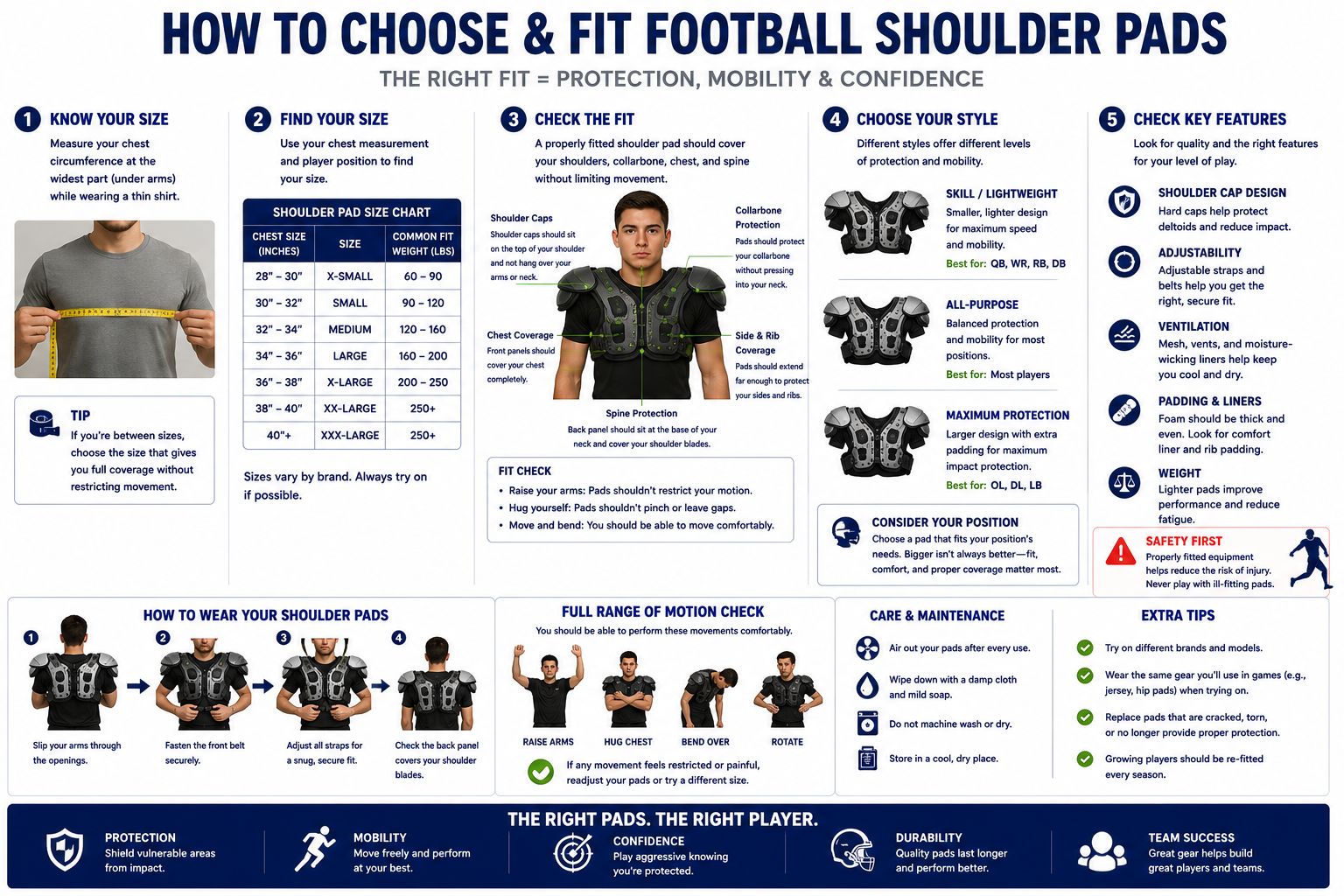
- 1Shoulder widthMeasure across the back from point to point.
- 2ChestWrap tape around the fullest part of the chest.
- 3Cap coveragePads cover shoulders without floating.
- 1Measure in socks or the base layer your child will actually wear.
- 2Write down age, height, weight, and any league requirement before shopping.
- 3Compare your measurement to the brand chart and choose the more comfortable beginner-safe range when between sizes.
Good reasons
When to size up
- Your child is between sizes and the larger size still feels controlled.
- The season is several months long and the gear is not protective headgear.
- The brand chart says the current measurement is at the top of a range.
Avoid these
Common mistakes
- Buying only for growth and making the gear hard to control.
- Skipping the brand chart because another brand fit last season.
- Ignoring league rules for bats, balls, sticks, and protective equipment.
Parent tip
Position-specific pads can fit differently, so confirm your child is buying for the role they play most.
FAQ
Is this size guaranteed to fit?
No. Treat it as a good starting point, then check the brand's official size chart before buying.
What should I do when my child is between sizes?
Consider comfort, growth, position, league rules, and whether the gear is protective. Avoid sizing up helmets without a proper chart match.
Related guides
Know your child's starting size before you shop.
Answer 4 quick questions — sport, gear type, age, and height — and get a beginner-safe size range plus what to avoid.